Designing a G+2 Home with Climate Comfort in Mind
Designing homes today is more than just aesthetics — it's about crafting spaces that interact intelligently with their environment. At our studio, we recently worked on a G+2 residential design that uniquely addresses thermal comfort, natural light, and ventilation using passive design principles. Let’s dive into how we approached this project differently.
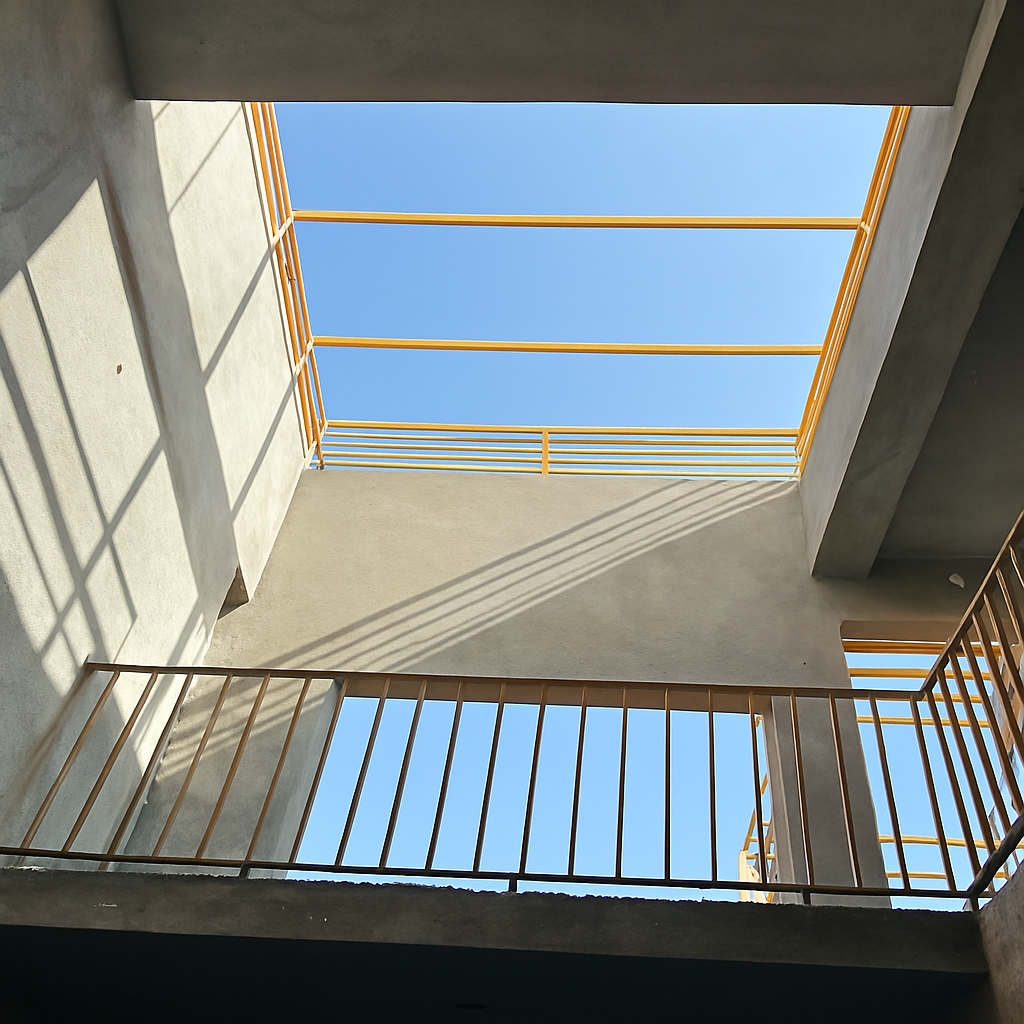
A Central Double-Height Volume: Breathing Life into the Home
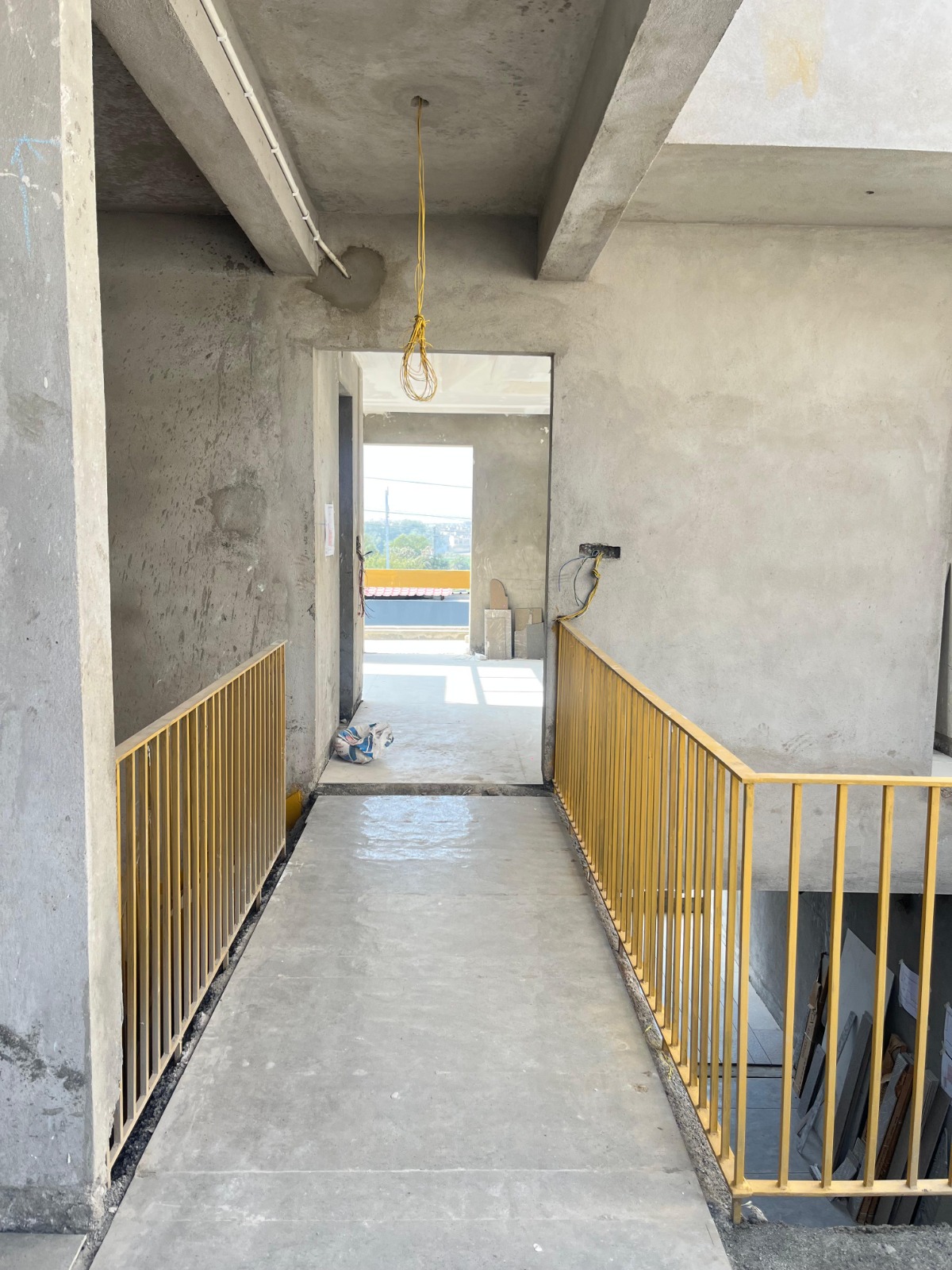
At the heart of our design is a central double-height space that acts as a natural regulator of air and light. This central void isn't just a visual statement — it serves as a core strategy for temperature control and air circulation through what's known as the stack effect.
- Stack Effect – Passive Cooling at its Best
- Orientation & Massing – Northeast for the Win
- Daylighting – Let There Be (Soft) Light
- Comfort Ventilation – Cross & Stack for Flow
- Thermal Comfort – Materials & Layout Working Together
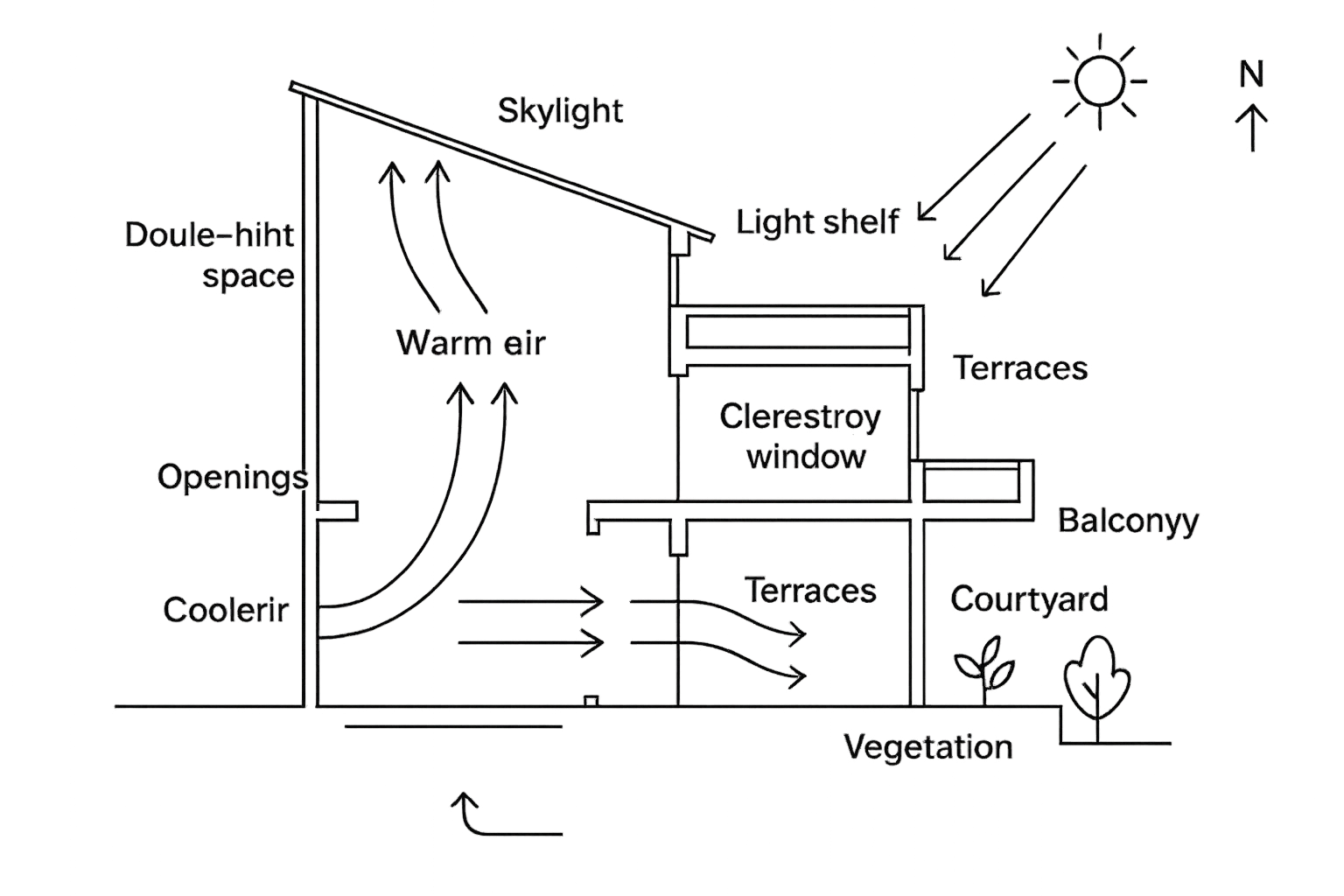
Stack Effect – Passive Cooling at its Best
- Cooler air enters from openings on the lower floors.
- Warm air naturally rises and escapes through openings at the top of the double-height space.
This creates a passive cooling cycle, reducing reliance on mechanical ventilation and keeping the internal temperature balanced — especially in the scorching summer months.
Orientation & Massing – Northeast for the Win
- Maintain cooler internal temperatures.
- Reduce heat gain on external surfaces.
- Maximize usable light without glare.
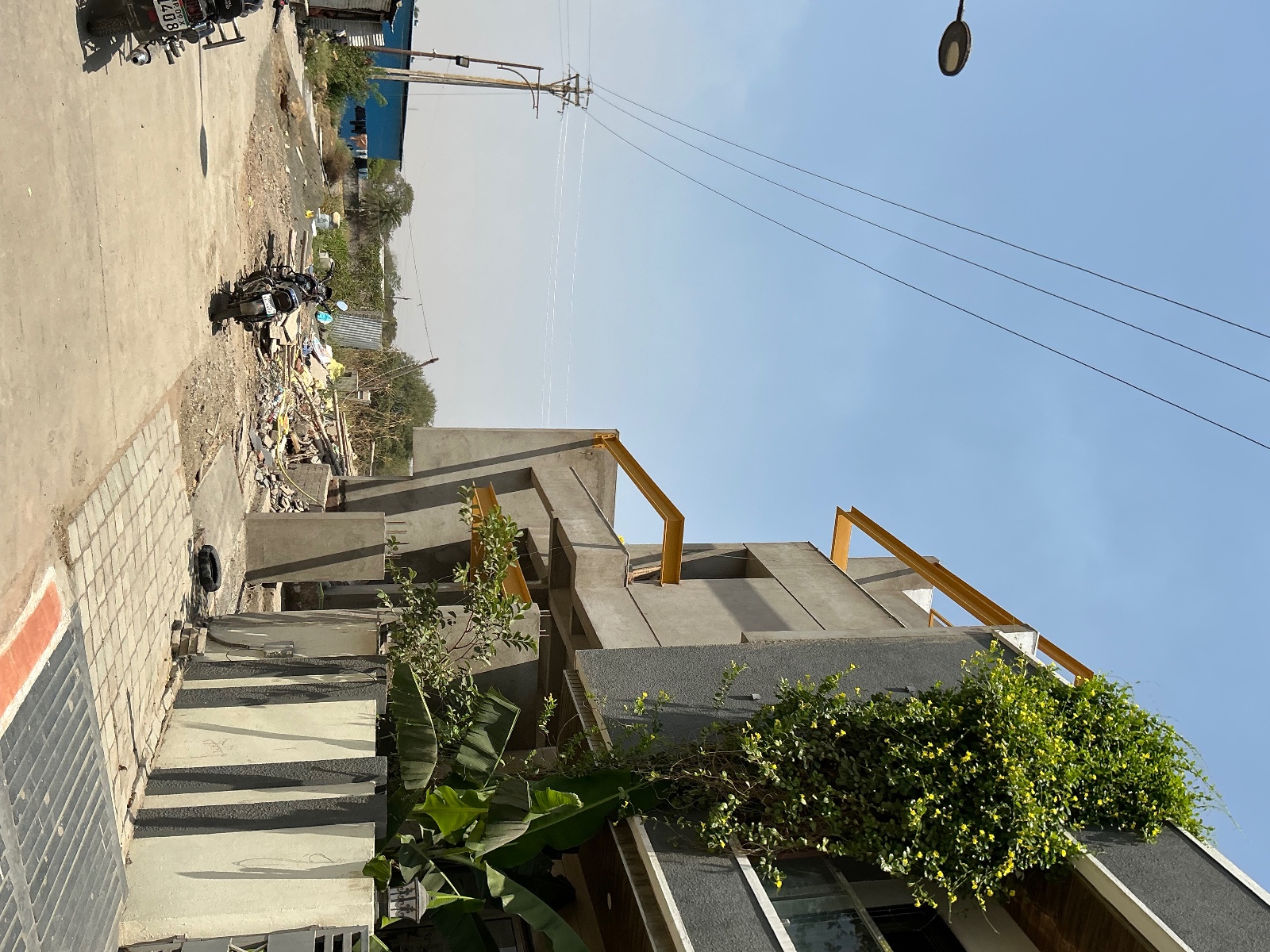
We consciously massed the building towards the northeast, minimizing harsh solar exposure from the south and west. The northeast side receives gentle morning sunlight but avoids direct harsh sunlight throughout most of the day.
Daylighting – Let There Be (Soft) Light
- Skylights and clerestory windows filter diffused daylight into central areas.
- Strategic window placement reduces the need for artificial lighting.
- Light shelves and deep overhangs prevent overheating while welcoming daylight.
Comfort Ventilation – Cross & Stack for Flow
- Move fresh air throughout the building.
- Prevent stale zones or heat buildup.
- Enhance indoor air quality.
We designed for cross ventilation in all habitable rooms. Aligned openings on opposite walls ensure airflow, while vertical shafts near staircases supplement this with the stack effect.
Thermal Comfort – Materials & Layout Working Together
- High thermal mass materials in sunny areas.
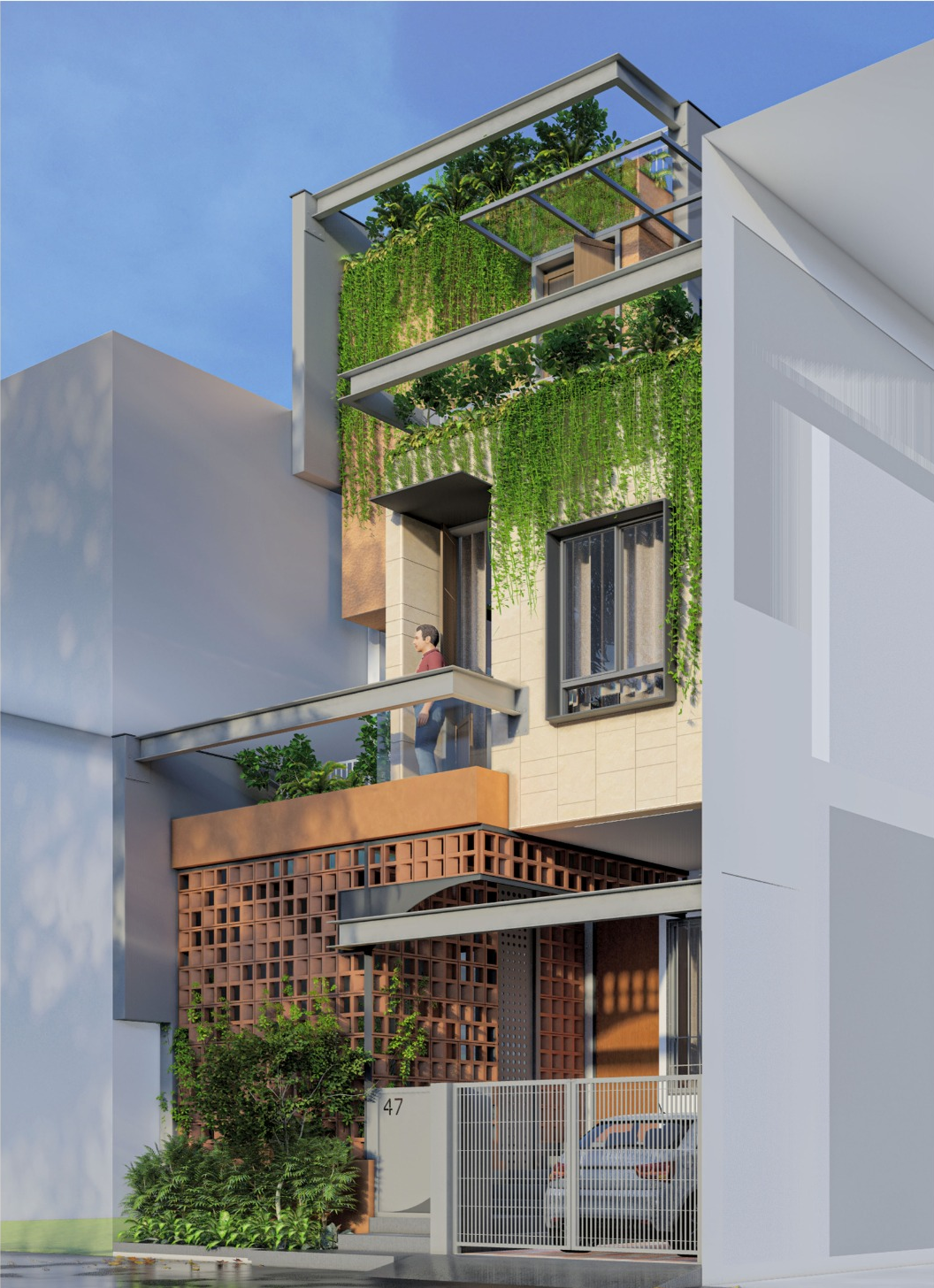
- Shaded terraces and balconies to reduce heat load.
- Courtyards and vegetation to cool surrounding air.
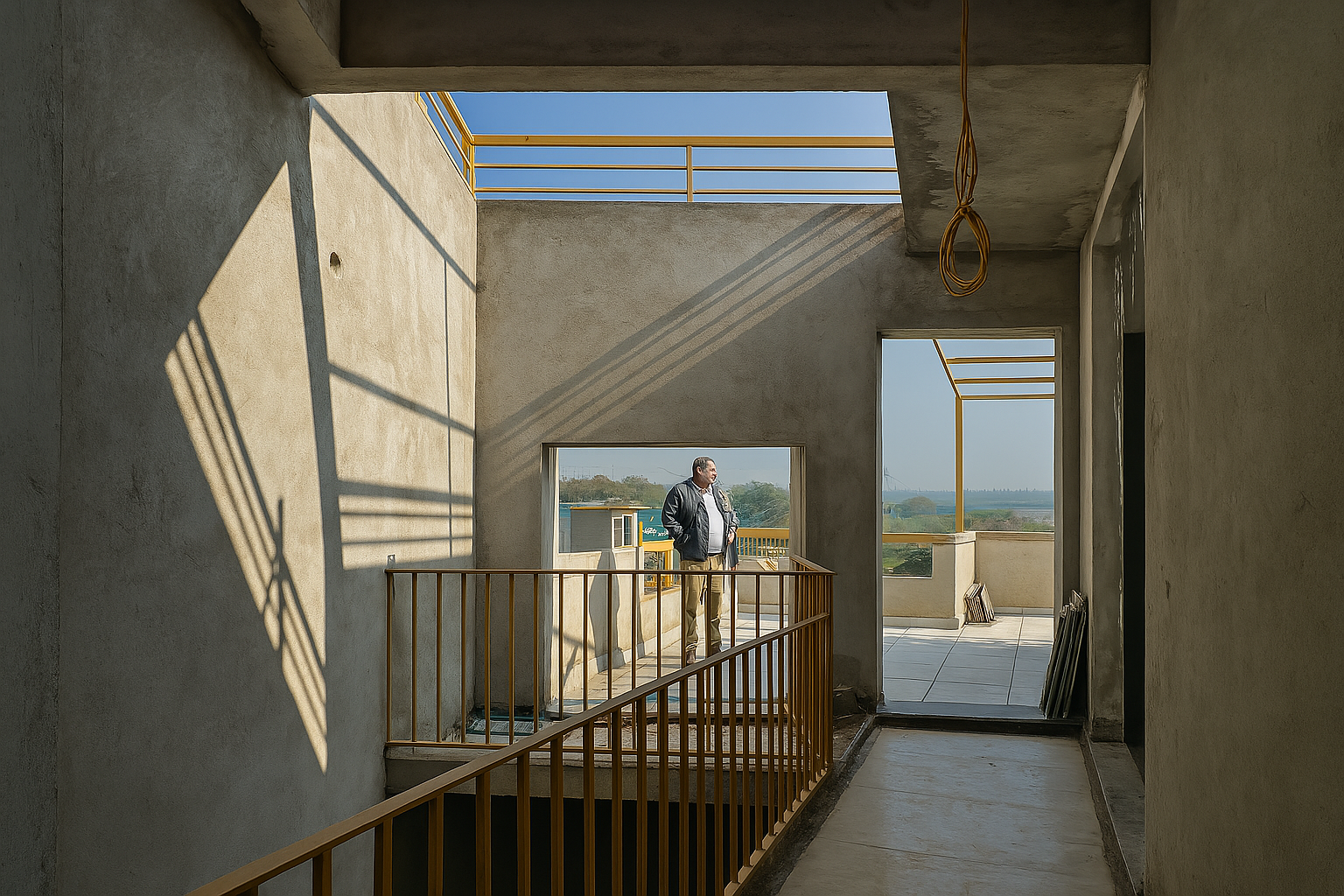
What Makes This Design Different?
Most urban homes today rely heavily on mechanical cooling. But our approach is climate-responsive, passive-first, and rooted in traditional Indian building wisdom — reinterpreted with a modern design sensibility.
We don’t just place windows; we calculate how wind, sun, and shadow move through the space. We don’t build extra rooms; we create thermal buffers. And we don’t design in isolation — every architectural element works in sync with nature.
© Studio Aangan